
Nothing brings comfort to the American dinner table quite like a steaming platter of corned beef and cabbage. This Irish-American classic combines fork-tender beef with buttery cabbage and vegetables, creating a one-pot meal that’s both hearty and satisfying. Whether you’re preparing for St. Patrick’s Day or simply craving a nourishing family dinner, this time-honored recipe delivers exceptional flavor with minimal effort. Perfect for beginners and experienced home cooks alike, this step-by-step guide will help you create a memorable meal that will have everyone coming back for seconds.
Why You’ll Love This Recipe
- Foolproof method that guarantees tender, flavorful corned beef every time
- One-pot meal that minimizes cleanup while maximizing flavor
- Budget-friendly option that transforms an inexpensive cut into something special
- Makes excellent leftovers for sandwiches, hash, and more
- Customizable with your favorite root vegetables
- Perfect make-ahead dish for entertaining or meal prep
- Rich in tradition but simple enough for weeknight cooking
- No special equipment required – just a large pot and basic kitchen tools
Ingredients
For the Corned Beef:
- 4-5 pounds corned beef brisket (with spice packet)
- 8 cups water (enough to cover the brisket)
- 2 bay leaves
- 1 tablespoon whole black peppercorns
- 2 cloves garlic, peeled and smashed
For the Vegetables:
- 1 large head green cabbage (about 2 pounds), cut into 8 wedges
- 1½ pounds small red potatoes, halved
- 4 large carrots (about 1 pound), peeled and cut into 2-inch chunks
- 2 large yellow onions, peeled and quartered
- 3 tablespoons unsalted butter
- 2 tablespoons fresh parsley, chopped (for garnish)
- Salt and freshly ground black pepper, to taste
For Serving:
- ½ cup whole grain mustard
- ½ cup horseradish sauce
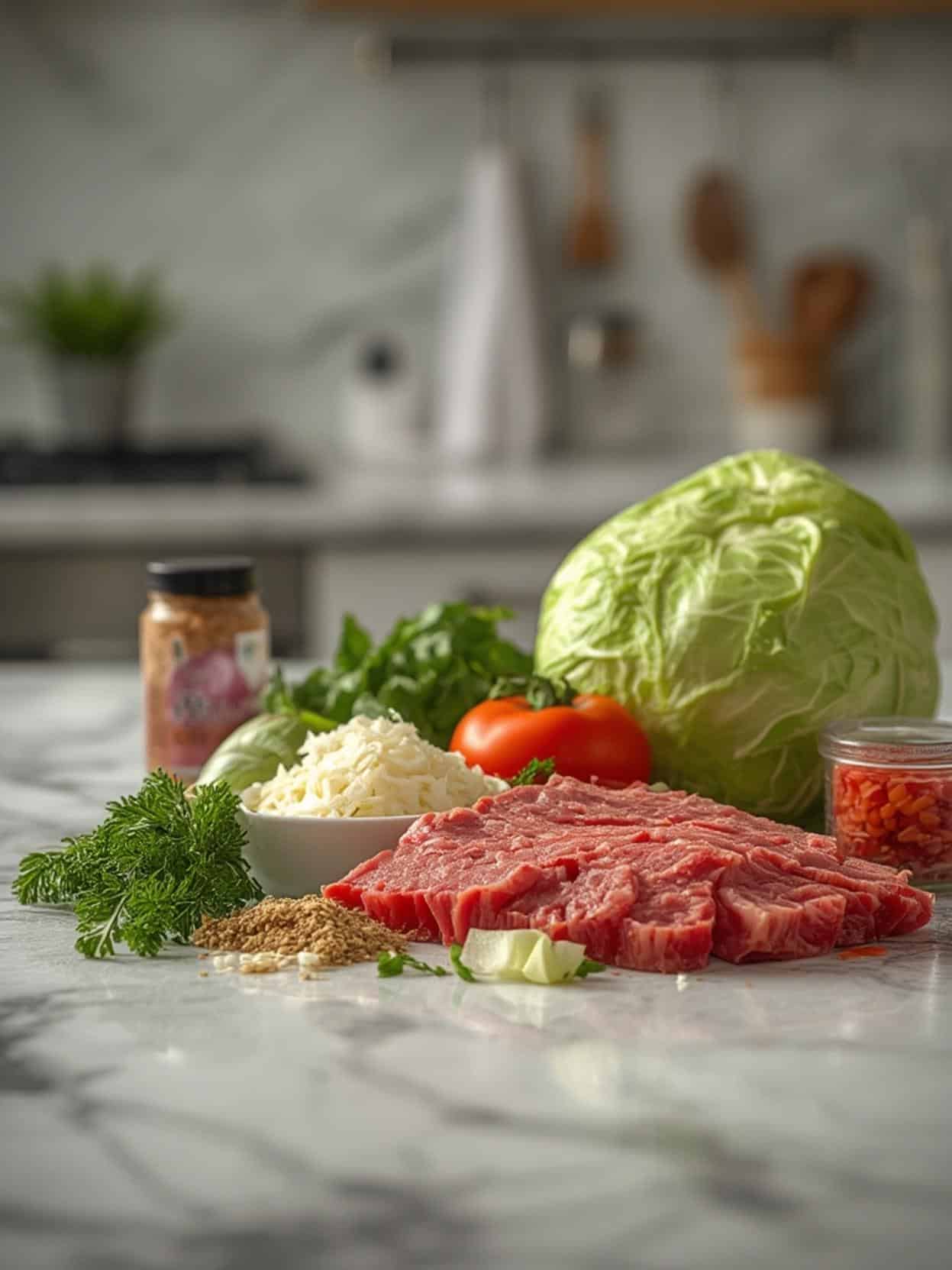
Ingredient Notes & Substitutions
Corned Beef: Look for flat-cut brisket rather than point-cut for more even cooking. If your brisket doesn’t come with a spice packet, you can create your own with 1 tablespoon each of mustard seeds, coriander seeds, and allspice berries, plus 1 teaspoon of cloves.
Cabbage: Green cabbage is traditional, but savoy cabbage offers a more delicate texture and slightly sweeter flavor. For a colorful twist, you can use half green and half purple cabbage, though purple will tint your other vegetables.
Potatoes: Small red potatoes hold their shape well during cooking. Yukon Gold potatoes make an excellent substitute with their buttery flavor. Avoid russet potatoes, which can become too mealy in this recipe.
Carrots: Rainbow carrots add visual interest without changing the flavor profile. If you prefer a sweeter taste, substitute parsnips for half of the carrots.
Liquid: While water works perfectly, replacing half the water with low-sodium beef broth adds deeper flavor. For a traditional Irish touch, substitute 2 cups of the water with Guinness or another dark beer.
Herbs: If fresh parsley isn’t available, dried works in a pinch (use 2 teaspoons instead of 2 tablespoons). For additional flavor, consider adding a sprig of fresh thyme or rosemary to the cooking liquid.
Step-by-Step Instructions

Step 1: Prepare the Corned Beef
Begin by removing the corned beef brisket from its packaging. Rinse it thoroughly under cold water to wash away excess salt from the brining solution. This step is crucial as it prevents your final dish from being too salty.
Place the brisket in a large Dutch oven or stockpot, fat side up. The fat cap will baste the meat as it cooks, keeping it moist. Add the contents of the spice packet, bay leaves, peppercorns, and smashed garlic.
Pour in enough cold water to cover the brisket by about 1 inch (approximately 8 cups, but adjust as needed for your pot size). The meat should be fully submerged for even cooking.
Step 2: Simmer the Brisket
Bring the liquid to a boil over high heat. You’ll notice some foam rising to the surface – this is normal. Use a large spoon to skim off this foam and discard it.
Once the liquid is boiling, reduce the heat to maintain a gentle simmer. Cover the pot with a tight-fitting lid and let the brisket simmer for about 3 hours for a 4-pound brisket (approximately 45-50 minutes per pound). The meat should be fork-tender when done – you should be able to easily insert a fork into the thickest part with little resistance.
Step 3: Prepare the Vegetables
While the corned beef is simmering, prepare your vegetables. Cut the cabbage into 8 wedges, leaving the core intact to help the wedges hold together during cooking. Quarter the onions, halve the potatoes (or quarter them if large), and cut the carrots into 2-inch chunks.
Step 4: Add the Vegetables
Once the beef is tender, carefully remove it from the pot and set it aside on a cutting board. Tent it loosely with aluminum foil to keep it warm.
Strain the cooking liquid through a fine-mesh sieve back into the pot to remove the whole spices, then bring it back to a boil. Add the potatoes, carrots, and onions to the pot. Return to a simmer and cook for 10 minutes.
Next, gently place the cabbage wedges on top of the other vegetables. They should partially submerge in the liquid. Add the butter in pieces distributed across the top of the cabbage. Cover and simmer for an additional 15-20 minutes until all vegetables are tender when pierced with a knife.
Step 5: Slice and Serve the corn beef and cabbage recipe
While the vegetables finish cooking, slice the corned beef against the grain into ¼-inch thick slices. Cutting against the grain (perpendicular to the lines of muscle fiber) is essential for tender meat.
Using a slotted spoon, transfer the vegetables to a large serving platter. Arrange the sliced corned beef alongside or on top of the vegetables. Spoon a little of the cooking liquid over the meat and vegetables to moisten them and add flavor.
Sprinkle with freshly chopped parsley and serve with whole grain mustard and horseradish sauce on the side.
Pro Tips for Best Results
1. Low and slow is key: Never let the corned beef boil rapidly as this can toughen the meat. A gentle simmer is essential for fork-tender results.
2. Rest before slicing: Allow the corned beef to rest for 10-15 minutes before slicing. This helps the juices redistribute throughout the meat.
3. Mind your knife direction: Always slice corned beef against the grain. Look for the lines of muscle fiber and cut perpendicular to them for the most tender texture.
4. Reserve some cooking liquid: Save about 2 cups of the cooking liquid separately after straining. This flavorful broth makes an excellent base for soup with any leftover meat and vegetables.
5. Season at the end: The corned beef brings plenty of salt to the vegetables as they cook in its broth. Taste before adding any additional salt.
6. Add butter to the cabbage: Those 3 tablespoons of butter make a significant difference in the flavor of the cabbage, giving it a rich, velvety quality.
Common Mistakes to Avoid
1. Skipping the rinse: Not rinsing the corned beef before cooking can result in an overly salty dish.
2. Cooking too quickly: Boiling instead of simmering will toughen the meat. Patience yields tenderness.
3. Overcooking the vegetables: Adding all vegetables at the beginning will leave them mushy by the time the meat is done. Stagger their addition as directed.
4. Cutting with the grain: Slicing parallel to the muscle fibers creates chewy meat. Always cut against the grain.
5. Overcrowding the pot: Using too small a pot forces everything to cook unevenly. Choose your largest Dutch oven or stockpot.
6. Not skimming the foam: Leaving the foam that rises during initial boiling can give the broth a cloudy appearance and slightly bitter taste.
Variations
Healthier Version
For a lighter take on this classic, make these adjustments:
- Use a leaner cut of corned beef and trim visible fat before cooking
- Increase the ratio of vegetables to meat
- Add 2 cups of chopped kale or collard greens during the last 5 minutes of cooking for additional nutrients
- Replace butter with 1 tablespoon of olive oil
- Serve with a side of Greek yogurt mixed with horseradish instead of traditional horseradish sauce
Slow Cooker Version
Perfect for busy households:
- Place the rinsed corned beef and spices in a 6-quart slow cooker
- Add water to cover the meat halfway
- Cook on LOW for 8 hours
- Remove the meat and add the potatoes, carrots, and onions
- Cook on HIGH for 30 minutes
- Add cabbage wedges and cook for an additional 30 minutes or until tender
- Proceed with slicing and serving as in the original recipe
New England Boiled Dinner Variation
This New England twist adds different vegetables:
- Add 1 medium turnip, peeled and cut into chunks
- Include 1 medium rutabaga, peeled and cut into chunks
- Use 1 large parsnip alongside the carrots
- Add 2 leeks, white and light green parts only, halved lengthwise
How to Store & Reheat
Storage
- Refrigeration: Store leftover corned beef and vegetables separately in airtight containers for up to 4 days in the refrigerator.
- Freezing the meat: Slice cooled corned beef and place in freezer-safe containers or bags with a small amount of cooking liquid to maintain moisture. Freeze for up to 3 months.
- Freezing vegetables: While possible, vegetables tend to become soggy after freezing and thawing. It’s best to enjoy them fresh or refrigerated.
Reheating
- Stovetop method: Place sliced corned beef in a skillet with a few tablespoons of reserved cooking liquid. Cover and warm over medium-low heat for 5-7 minutes.
- Microwave method: Arrange sliced beef on a microwave-safe plate, drizzle with a tablespoon of cooking liquid or water, cover with a damp paper towel, and heat in 30-second intervals until warmed through.
- Oven method: Preheat oven to 325°F. Place beef slices in a baking dish with a few tablespoons of cooking liquid. Cover tightly with foil and warm for 15 minutes or until heated through.
- For vegetables: Reheat in a covered skillet with a splash of water or broth over medium heat until warmed through, about 5 minutes.
What to Serve With Corned Beef and Cabbage
Traditional Accompaniments
- Irish soda bread with salted butter
- Whole grain mustard and horseradish sauce
- Pickled beets
- Apple sauce
Side Dishes
- Colcannon (Irish mashed potatoes with kale or cabbage)
- Buttered peas with mint
- Simple green salad with vinaigrette
- Roasted Brussels sprouts
Beverage Pairings
- Irish stout or dark beer
- Hard apple cider
- Unsweetened iced tea with lemon
- Irish whiskey (as an aperitif)
Dessert Options
- Irish apple cake
- Bread pudding with whiskey sauce
- Bailey’s chocolate mousse
- Lemon tart
FAQs
What is the difference between corned beef and regular beef brisket?
Corned beef is made from beef brisket that has been cured in a salt brine with spices. The term “corned” comes from the large “corns” or grains of salt historically used in the curing process. Regular beef brisket is the same cut but hasn’t undergone this brining process, resulting in different flavor and texture. The curing gives corned beef its distinctive pink color and tangy flavor.
Can I make corned beef and cabbage ahead of time?
Yes, corned beef and cabbage actually improves with time as flavors meld. You can cook the beef completely up to two days ahead, refrigerate it in some of its cooking liquid, and then slice and reheat when ready to serve. The vegetables are best cooked fresh on serving day, but the entire dish can be fully prepared a day ahead and gently reheated.
Why is my corned beef tough?
Tough corned beef usually results from cooking at too high a temperature or not cooking long enough. Corned beef requires low, slow cooking to break down the connective tissues in this naturally tough cut. Ensure you’re maintaining a gentle simmer, not a boil, and cook until the meat is fork-tender. A 4-pound brisket typically requires about 3 hours of simmering.
Is corned beef and cabbage actually Irish?
While inspired by Irish cuisine, corn beef and cabbage recipe as Americans know it is an Irish-American creation. In Ireland, bacon or pork was traditionally served with cabbage. Irish immigrants in America substituted more affordable corned beef, creating the dish we now associate with St. Patrick’s Day celebrations. In modern Ireland, you’re more likely to find “bacon and cabbage” than corned beef.
Can I use the cooking liquid for anything else?
Absolutely! The cooking liquid is incredibly flavorful and versatile. Strain and refrigerate it to use as a base for soups (particularly good for potato soup or vegetable soup), as cooking liquid for rice or other grains, or to moisten and flavor leftover meat when reheating. You can also reduce it to intensify the flavor and use it as a sauce base.
Nutrition Overview
Please note these are approximate values per serving (assuming 8 servings from this recipe):
- Calories: 480-520 calories
- Protein: 35-40g
- Fat: 25-30g (10-12g saturated fat)
- Carbohydrates: 25-30g
- Fiber: 5-7g
- Sodium: 1200-1500mg (varies based on how thoroughly the meat is rinsed)
This dish provides a good source of protein, vitamins A and C, potassium, and iron. The sodium content is high due to the brining process of the beef, which is essential to its flavor profile. Balance this meal with lower-sodium choices throughout the day.
The Perfect Comfort Food for Any Occasion
Corned beef and cabbage stands as a testament to the beauty of simple cooking. This one-pot wonder transforms humble ingredients into a meal that satisfies on the deepest level—warming the body and soul with each forkful. While traditionally associated with St. Patrick’s Day celebrations, this versatile dish deserves a place in your regular meal rotation year-round.
The magic lies in its simplicity. A gentle simmer transforms a tough cut of beef into melt-in-your-mouth tenderness, while the vegetables soak up the flavorful broth, creating a harmonious meal that’s greater than the sum of its parts. With minimal active cooking time and maximum flavor payoff, it’s the perfect recipe for both weeknight dinners and special occasions.
Whether you’re connecting with your Irish-American heritage, creating new family traditions, or simply enjoying a hearty, satisfying meal, this classic recipe delivers comfort in every bite. Give it a try and discover why generations of Americans have made corned beef and cabbage a beloved staple of home cooking.
Have you tried making corned beef and cabbage? Share your experience in the comments below, or tag us in your culinary creations on social media. We’d love to see how this recipe comes to life in your kitchen!